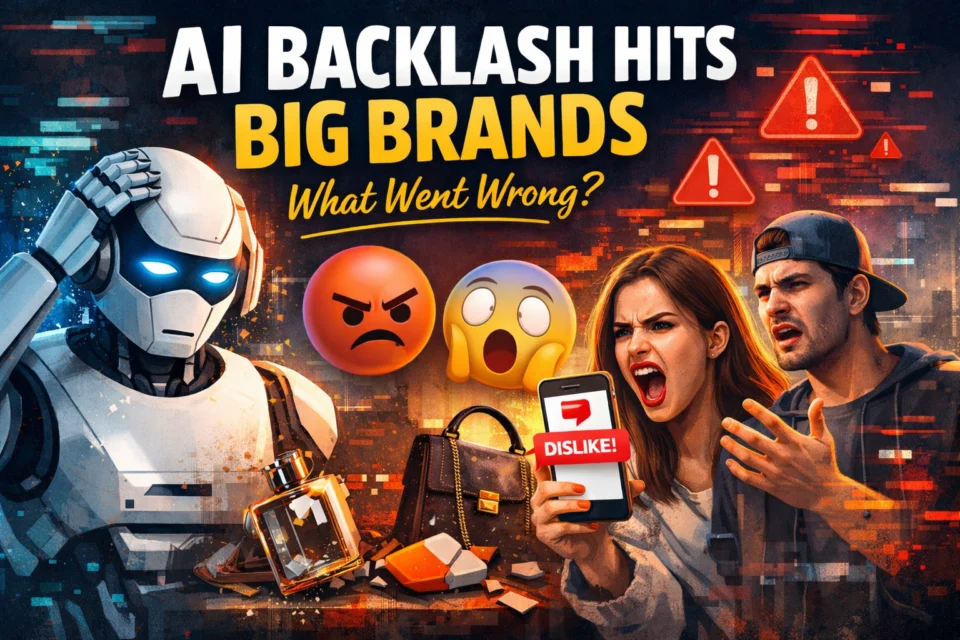
Several well-known brands faced public criticism during 2026 after audiences identified marketing content that appeared to be generated by artificial intelligence, turning campaigns into sources of unwanted attention. The reaction reflected a shift in consumer sentiment, with viewers increasingly quick to spot and call out AI-made imagery and copy.
One widely discussed case involved Nike, when observers flagged what looked like AI-written text on a product page in May. Coverage noted that established brands are particularly exposed to accusations of inauthenticity, since audiences hold them to a higher standard for original, human-crafted messaging. The episode drew commentary across marketing and business press, amplifying a relatively small detail into a broader conversation about brand trust.
Survey data cited in the coverage underscored why the backlash gathered force. Consumer enthusiasm for AI in marketing fell sharply, and a majority of respondents said they trust brands less when they suspect an ad was made with AI. A large share also reported reducing engagement with content they believed to be AI-generated, a direct risk to the performance metrics brands track.
The response from marketers evolved over the year. Some brands that had leaned into AI-first messaging pulled back, and a few launched campaigns that poked fun at AI rather than showcasing it. Others adopted a quieter approach, using AI in production workflows without advertising that fact to consumers.
The pattern that emerged framed AI as a tool that can help behind the scenes but can damage a brand when it becomes the visible face of a campaign, especially when audiences feel a company is substituting automation for authenticity.
Source: Ad Pulse -- https://adpulse.com/ai-backlash-hits-big-brands-what-went-wrong-and-why-fans-are-mad/