Token optimization, smarter defaults, and model routing cut AI costs by 50 to 60 percent where they were applied inside McKinsey, according to a November 23, 2026 article from the firm titled AI economics in action: What four companies have done and learned. The piece, by Sven Blumberg, Wasim Lala, Kaavini Takkar, and Uwe Agsten, examines how organizations are managing rising spending on AI usage.
At a US energy company described in the article, AI consumption costs were at one point doubling every month. An initial review identified an optimization opportunity equal to approximately 18 percent of the company's AI spend.
McKinsey reported its own usage reached roughly five trillion AI tokens a month by May 2026. About 10 percent of users accounted for about 65 percent of token consumption. When the firm switched some internal work to models that were five to ten times cheaper, those models delivered roughly 95 percent of the required quality at about half the cost.
The article also reports time savings. A workforce planning exercise shrank from roughly six weeks to about a week and a half, and a sales acceleration analysis took approximately two weeks compared with roughly two months before.
A consumer company in the study projected a potential return of approximately four times its investment. A life sciences company revisits the economic terms of its AI contracts in roughly 12-month increments. The article does not disclose dollar costs or per-token prices.
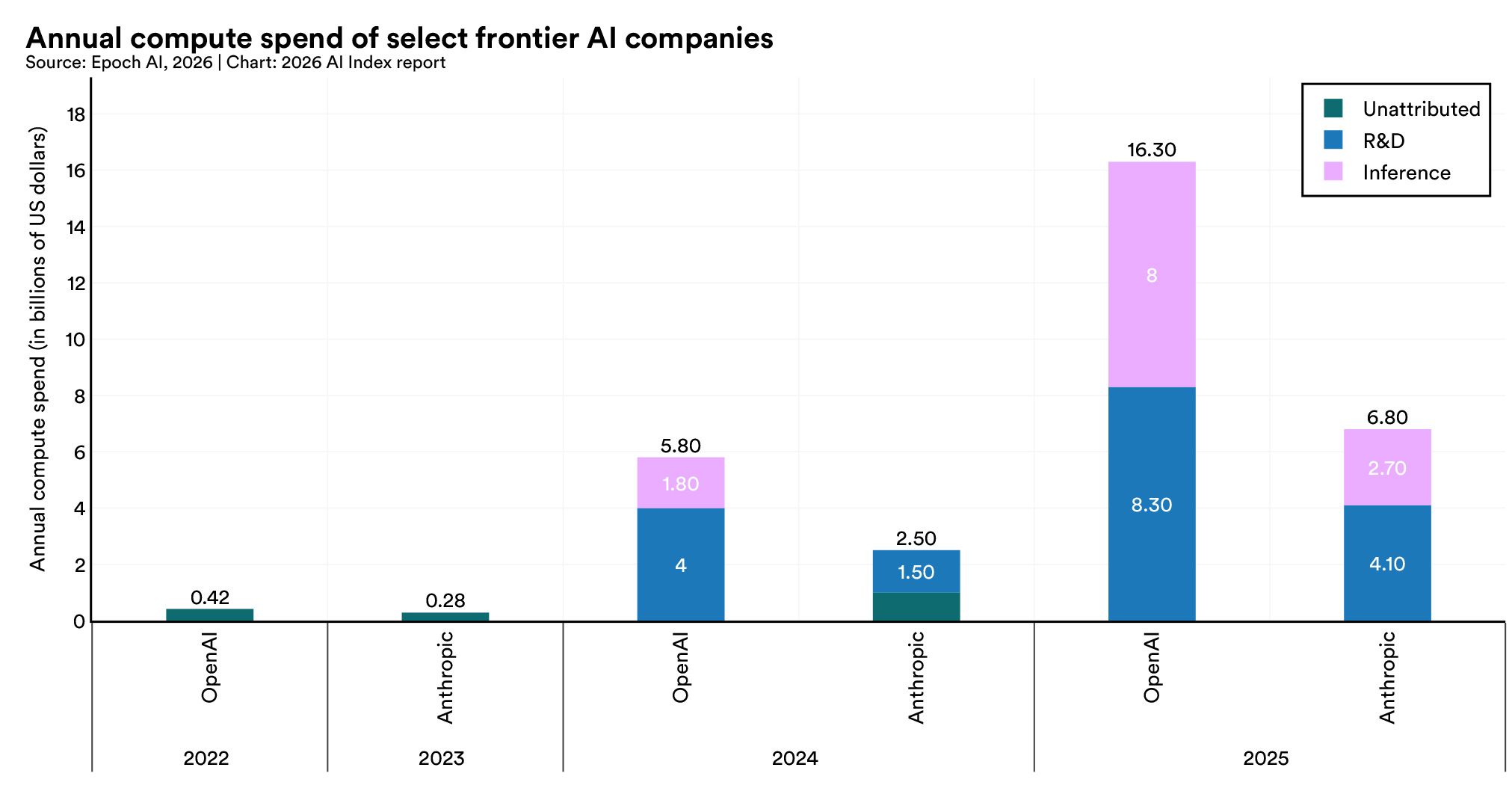
The cost pressure extends to model developers. A Stanford AI Index chart based on Epoch AI data shows OpenAI's annual compute spending reached $16.3 billion in 2025 and Anthropic's reached $6.8 billion.
Source: McKinsey and Company -- https://www.mckinsey.com/capabilities/quantumblack/our-insights/ai-economics-in-action-what-four-companies-have-done-and-learned