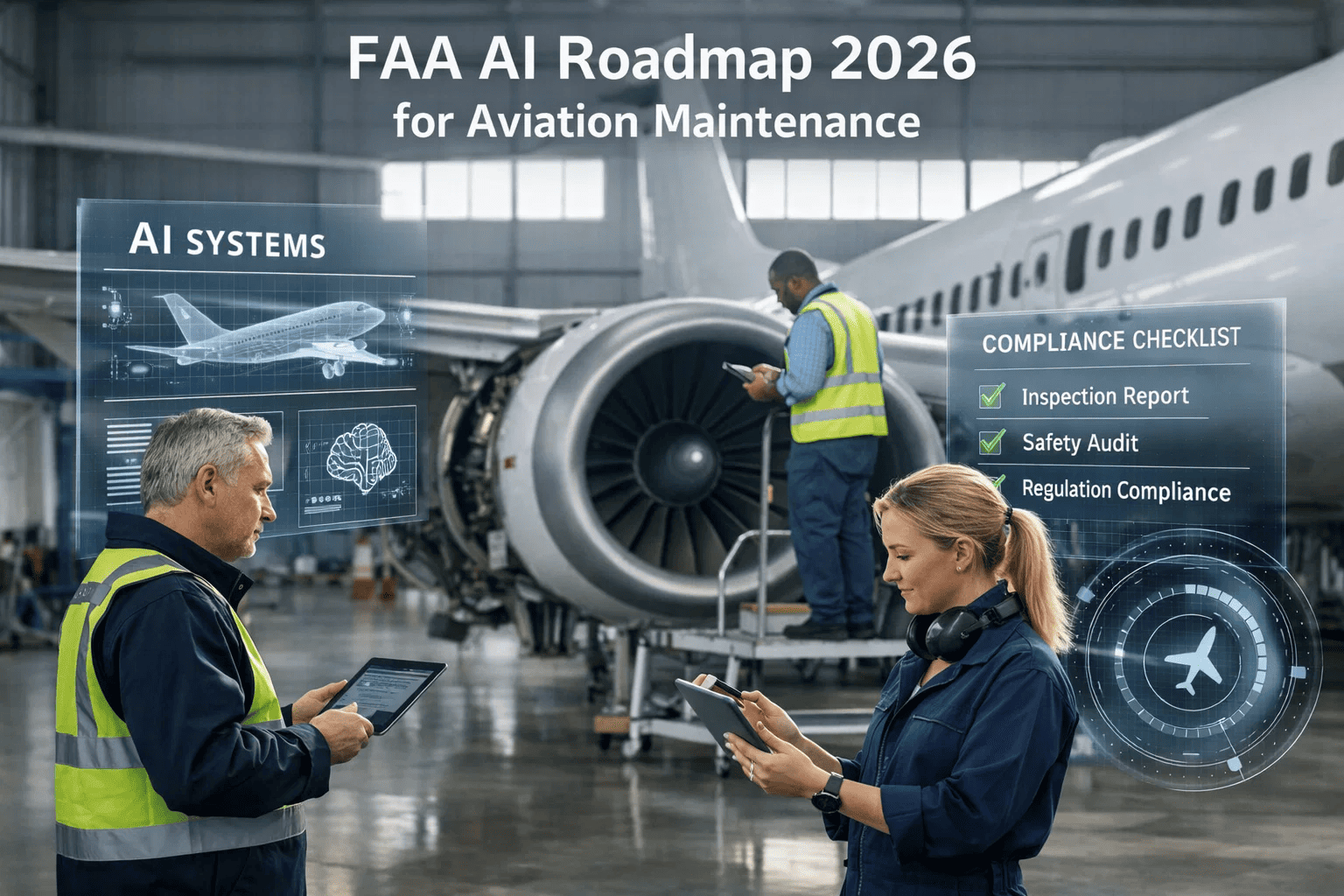
The FAA's evolving guidance on artificial intelligence in aviation maintenance is drawing increased attention from MRO operators in 2026 as the agency moves toward formal rulemaking around AI system transparency and human oversight requirements. FAA human factors research has consistently found that more than 80 percent of aviation maintenance errors carry a human factors component -- a proportion that does not diminish when AI tools are introduced into the workflow.
EASA's NPA 2023-11, which proposed specific requirements for AI transparency and human supervision in aviation safety systems, is now moving toward formal regulatory status in 2026. Both agencies share the view that AI can improve diagnostic accuracy and predictive maintenance scheduling, but only when technicians retain clear visibility into how AI recommendations are generated and the authority to override them.
For MRO operators, the practical implication is that technology investments must be paired with training investments. Tools that generate maintenance recommendations without explainable logic create compliance risk under the emerging framework, regardless of their accuracy in controlled testing. Bombardier has moved early on this challenge, launching an accelerated technician training program in 2026 designed to help maintenance professionals achieve FAA Airframe and Powerplant certification on a compressed timeline, addressing both the workforce skills gap and the need for technically proficient oversight of AI-assisted systems.
Source: OXmaint -- https://oxmaint.com/industries/aviation-management/faa-ai-roadmap-aviation-maintenance-mro-2026