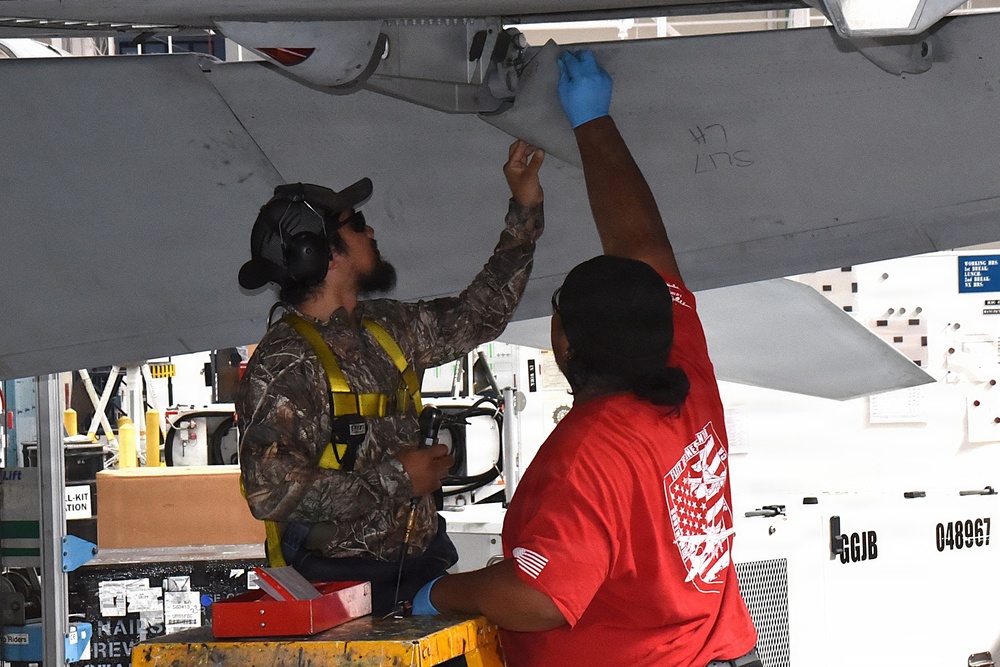
The US Navy is flight testing a 3D-printed composite patch repair method that aims to cut F/A-18 Super Hornet repair times by roughly half at forward operating bases. The Naval Air Warfare Center Aircraft Division (NAWCAD) and Fleet Readiness Center Southwest (FRCSW) developed the technique, which lets sailors repair damaged composite structures directly at the flight line rather than shipping parts to distant depots.
Composite damage on parts such as engine bay doors has historically grounded aircraft for extended periods. The traditional repair process depends on highly specialized maintenance artisans and long turnaround times, which keeps jets out of service and stretches supply chains. NAWCAD and FRCSW engineers responded by creating high-performance printed composite patches that apply directly onto the aircraft, along with application procedures and quality checks intended to certify the printed parts as safe for flight.
After successful laboratory and ground testing, the joint team plans to flight test the repair on an operational aircraft this summer. The approach draws on a network of 3D printers already installed at 22 Navy maintenance sites worldwide, allowing repairs to happen where aircraft operate instead of waiting for components to travel back to repair depots in the United States.
NAWCAD supports test, evaluation, research, development, and sustainment for Navy and Marine Corps aviation platforms from its base in Patuxent River, Maryland, with additional sites in St. Inigoes, Maryland, Lakehurst, New Jersey, and Orlando, Florida. FRCSW operates as one of naval aviation's major maintenance facilities in San Diego.
Source: DVIDS - https://www.dvidshub.net/news/569124/navy-testing-cut-hornet-composite-repair-time-half-with-3d-printers