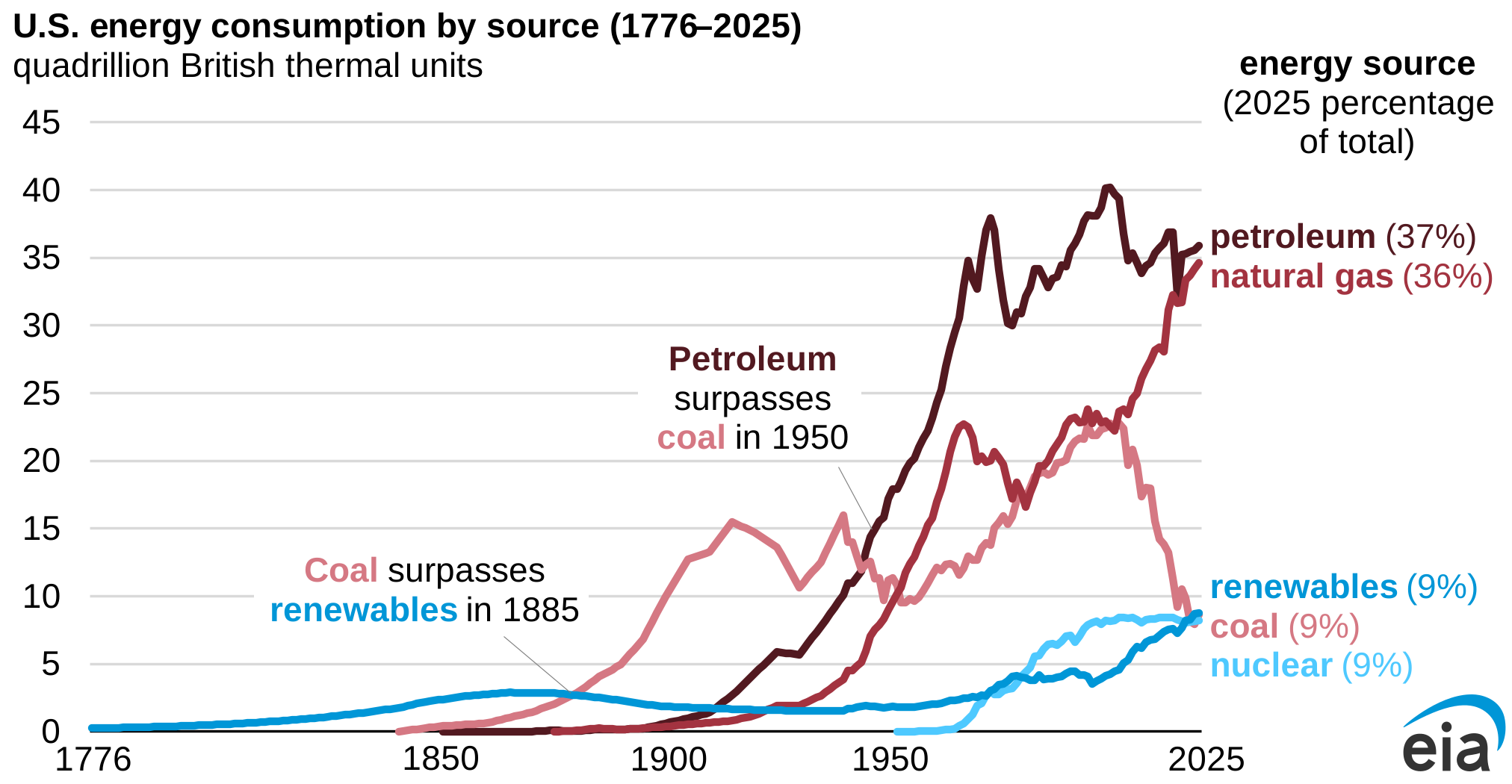
The US Energy Information Administration's 250-year review of American energy consumption places nuclear power among the country's three mid-sized energy sources. In 2025, total US energy use reached 96 quadrillion British thermal units, up 2% from 2024 and below the record 99 quads set in 2007. Nuclear, coal and renewable energy each supplied about 9% of that total.
Petroleum was the most-used source last year, followed closely by natural gas. Fossil fuels together accounted for 82% of energy consumed.
Nuclear entered the US energy mix in 1957, when the first full-scale commercial nuclear power plant came online in Pennsylvania. The EIA notes that the US nuclear fleet peaked at 112 operatable units, and that 94 units were operating in 2025. That is a gap of 18 units from the peak.
The report also tracks how nuclear compares with renewables. In 2022, US energy consumption from renewables surpassed nuclear for the first time since 1984. In 2023, renewables surpassed coal for the first time since the 1880s. Wind and solar accounted for more energy used than hydropower in 2025.
EIA describes the most recent growth in energy use as partly tied to electricity demand from data centers, cryptocurrency mining and electric vehicles. The agency expects US electricity demand to grow faster than at any time since 2000 between now and the end of 2027, mostly because of data centers.
The charts in the EIA analysis use data from the agency's Monthly Energy Review, with estimates for years before 1945 drawn from historical sources. The report was published June 30, 2026, as part of the nation's 250th anniversary.
Source: U.S. Energy Information Administration - https://www.eia.gov/todayinenergy/detail.php?id=67824