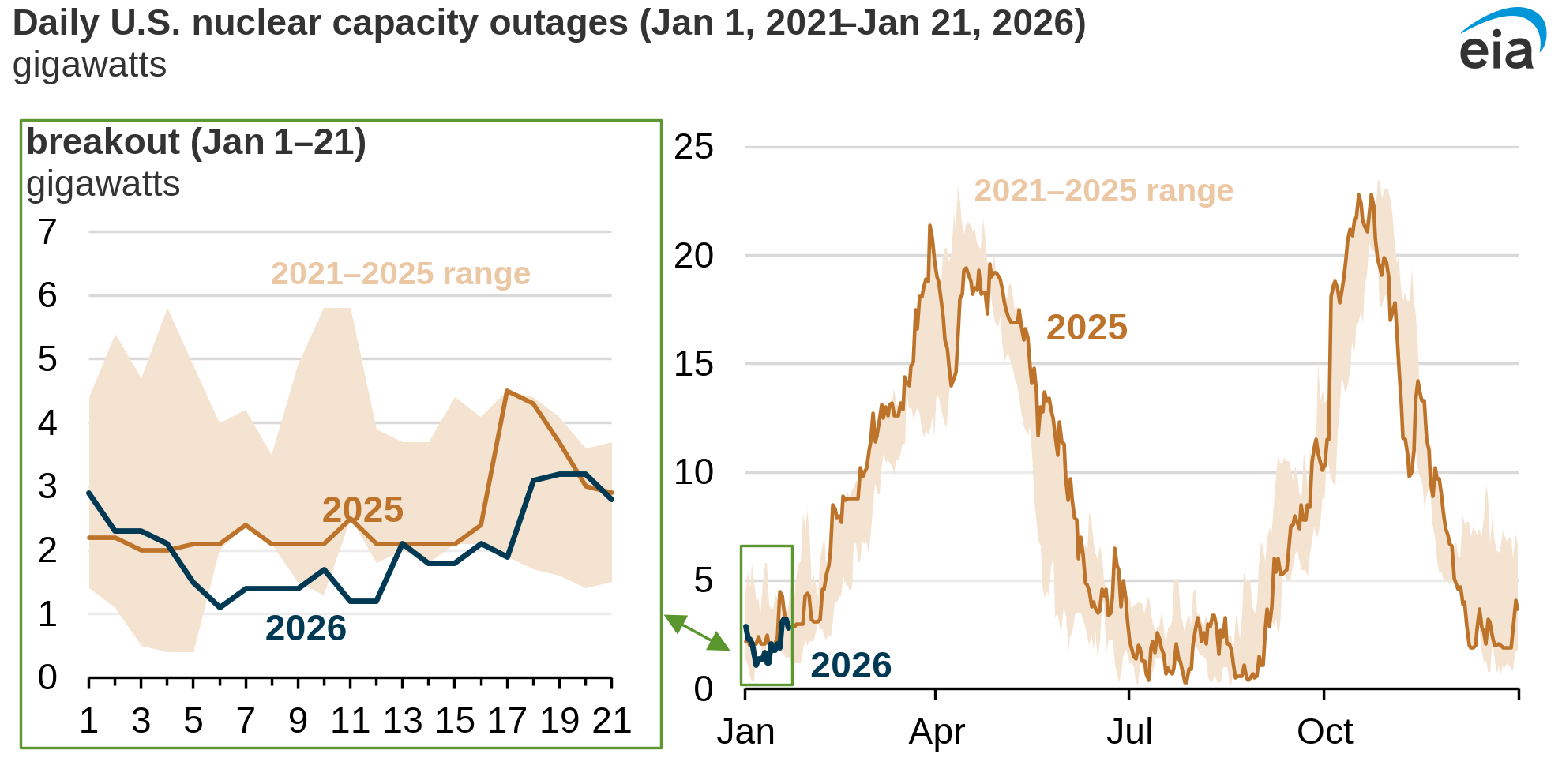
US nuclear power plant outages averaged 2.0 gigawatts between January 1 and January 21, 2026, according to the US Energy Information Administration. That level is 20 percent lower than the same period in 2025 and fell below the previous five-year range for 7 of the 21 days.
EIA data from its Status of U.S. Nuclear Outages dashboard show that outages fell to 1.1 gigawatts on January 6, 2026. That was the lowest figure since September 2, 2025, and 1.0 gigawatt below the outage level on January 6, 2025.
The Palisades Nuclear Plant in Michigan accounted for a large share of what remained. The plant is in the process of restarting, so EIA counts it as an outage while it operates at 0 percent. On January 6 the Palisades outage made up nearly three-quarters of total US nuclear outages. The Department of Energy approved a loan to support the restart in March 2025, and on September 9, 2025 the Nuclear Regulatory Commission changed the plant's status from decommissioning to restarting.
EIA notes that US nuclear plants typically serve base load demand, which occurs more or less continuously through the day and across seasons. Planned outages for maintenance and refueling follow a seasonal pattern, with higher totals in spring and fall when electricity demand declines. Unplanned outages include weather-related disruptions and early retirements.
The EIA chart tracks daily US nuclear capacity outages from January 1, 2021 through January 21, 2026 against the 2021 to 2025 range.
Source: US Energy Information Administration - https://www.eia.gov/todayinenergy/detail.php?id=67047