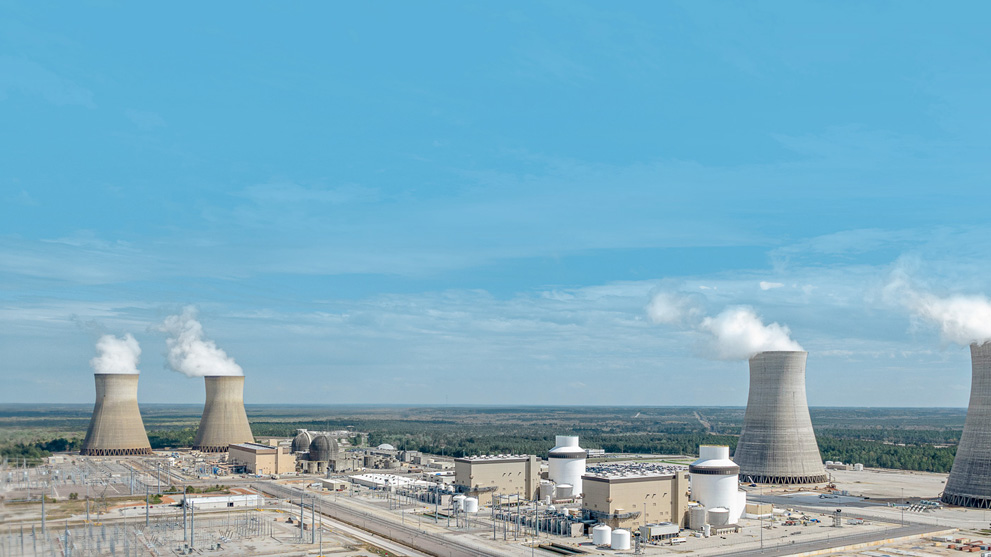
Plant Vogtle in Georgia stands as the most significant addition to the US nuclear fleet in a generation, and its newest reactors are now delivering steady power to the Southeastern grid. Unit 3 feeds roughly 1,100 megawatts of electricity into the system, and Unit 4 has entered commercial operation, together adding about 2,200 megawatts of baseload generation for Georgia Power customers.
Unit 3 is an AP1000 pressurized water reactor from Westinghouse, designed to deliver around 1,100 megawatts of net electric output under normal operating conditions, enough to power hundreds of thousands of homes. With all four reactors running, the Vogtle site near Waynesboro operates at a generating capacity of about 4,800 megawatts across its 3,000-acre footprint, supplying electricity to more than one million homes and businesses each day.
The completion of Units 3 and 4 made Vogtle the largest generator of clean electricity in the United States. For Georgia, the added capacity strengthens grid reliability at a time when the state is absorbing rapid load growth from data centers and industrial expansion across the metro Atlanta region.
The project's path was not smooth. Georgia Power has acknowledged that construction of the two new units ran significantly over the original budget and schedule, with total costs climbing into the tens of billions of dollars. Even so, the finished reactors now provide decades of firm output. As utilities and regulators weigh how to meet rising demand, Vogtle serves as both a working asset on the Georgia grid and a reference point for the cost and timeline of building large reactors in the United States.
Source: Georgia Power -- https://www.georgiapower.com/about/energy/plants/plant-vogtle/units-3-4/vogtle-media.html