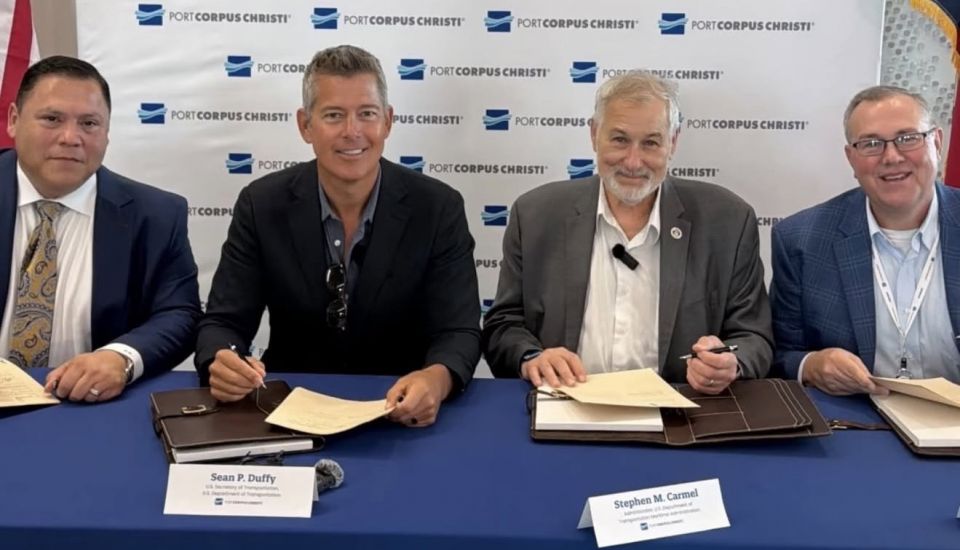
The Maritime Administration signed its second memorandum of cooperation with a US seaport to advance small modular reactors for commercial vessels, ports, and other maritime assets. The agreement pairs the Department of Transportation agency with the Port of Corpus Christi in Texas, moving the program to the Gulf Coast after an earlier partnership on the West Coast.
Transportation Secretary Sean Duffy, MARAD Administrator Stephen Carmel, Port of Corpus Christi CEO Kent Britton, and Port Commission Chair Gabe Guerra signed the document at a ceremony. Duffy said small modular reactors have the potential to reshape the American maritime sector, lower shipping costs, and strengthen supply chains.
Under the agreement the parties will examine SMR technologies, resilient port microgrids, shoreside power architecture, infrastructure capable of supporting emerging vessel propulsion concepts, and workforce development. The Port of Corpus Christi and its customers moved 203.4 million tons of goods in 2025, down 1.5% from the record set in 2024. Crude oil shipments reached 127.4 million tons and liquefied natural gas exports reached 18.6 million tons. The Department of Transportation identifies the Texas seaport as the largest US port for petroleum exports.
In a separate announcement, the port and Core Power said they will conduct a site specific maritime nuclear readiness study. The work would assess whether Corpus Christi could host a floating nuclear power plant serving port and regional demand and function as a gateway for nuclear powered commercial ships. Core Power described the study as preliminary and said it would not finalize siting, licensing, construction, or technology decisions. MARAD signed its first such agreement with the Port of Long Beach earlier this summer.
Source: American Nuclear Society - https://www.ans.org/news/2026-08-24/article-8332/corpus-christi-seaport-latest-to-partner-with-marad-on-maritime-reactors/