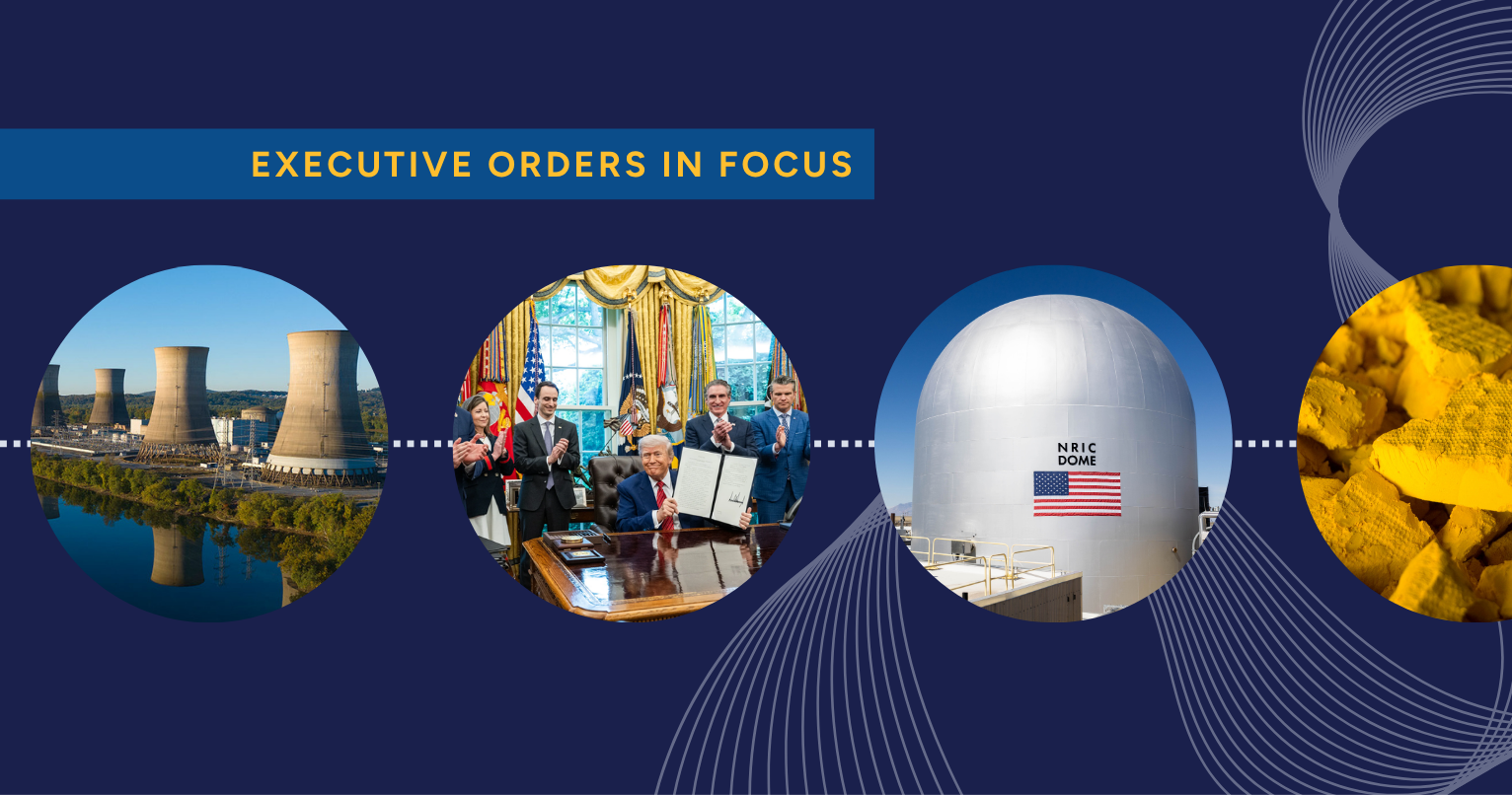
The US nuclear sector is moving quickly in 2026, with federal policy and private investment converging to accelerate new construction, advanced reactor approvals, and the first restart of a shuttered plant. National goals call for expanding nuclear capacity from around 100 gigawatts today toward 400 gigawatts by 2050.
Advanced reactor milestones are stacking up. NuScale Power received approval from the Nuclear Regulatory Commission for its uprated small modular reactor design, becoming the second SMR design cleared for use in the country. TerraPower received its construction permit in March 2026, the first ever issued by the NRC for a commercial non-light-water power reactor, and broke ground on its Natrium plant the following month.
Reactor restarts mark another shift. For the first time, the NRC approved the restart of a reactor, Holtec's Palisades plant in Michigan, which is scheduled to return to service later this year. Constellation's Crane Clean Energy Center in Pennsylvania is set to restart in 2027, reversing the pattern of permanent closures that defined the prior decade.
International partnerships are expanding the pipeline. In March 2026 the US Department of Commerce announced a 40 billion dollar energy partnership with Japan to deploy GE Vernova Hitachi BWRX-300 small modular reactors in Tennessee and Alabama, aiming to supply roughly 3 gigawatts of baseload power to the Southeast. As of March 2026, the United States operated 94 licensed commercial reactors generating almost 20 percent of the nation's electricity.
Source: Department of Energy - https://www.energy.gov/ne/articles/one-year-after-executive-orders-us-nuclear-energy-renaissance-full-swing