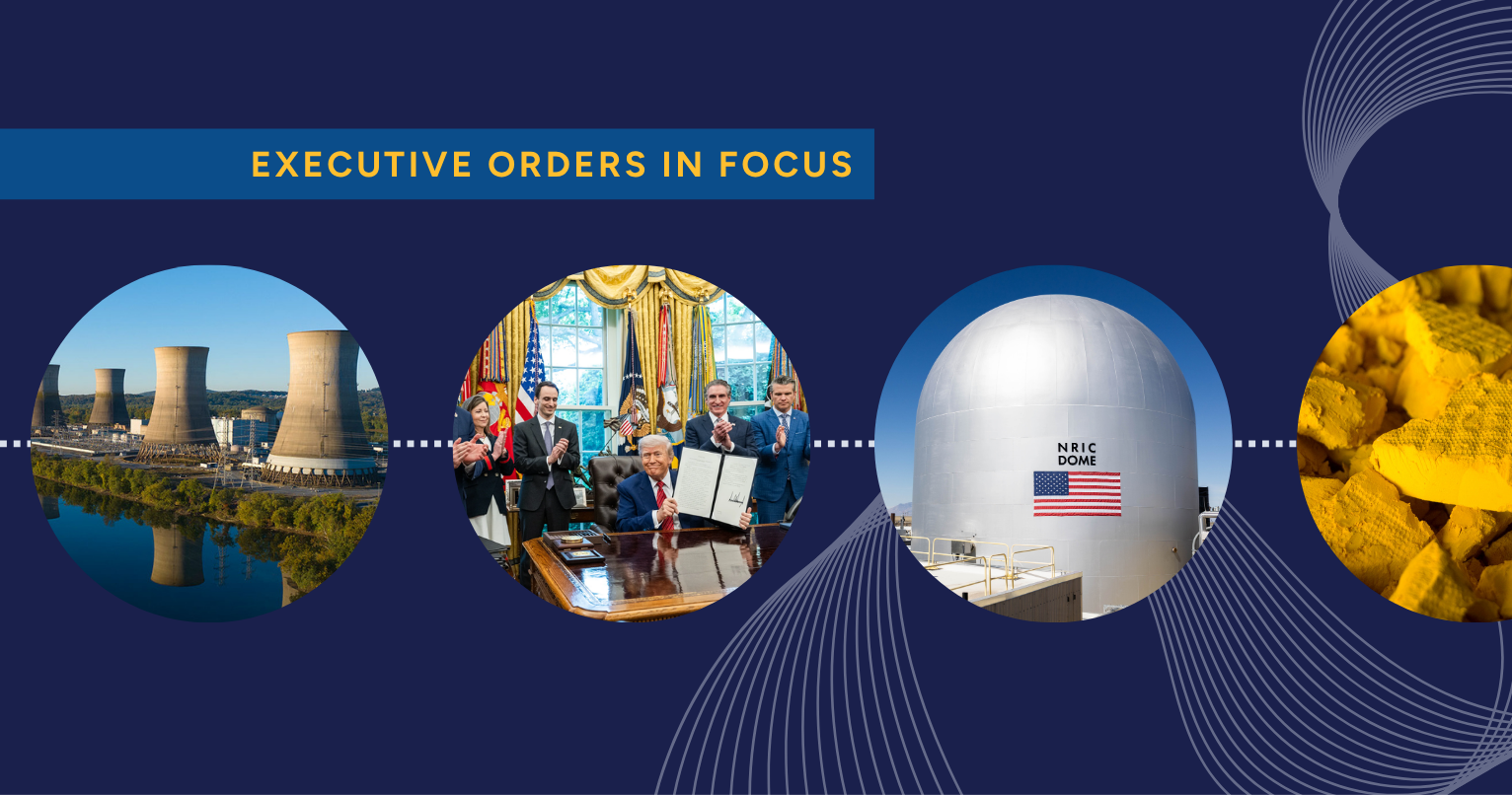
The United States nuclear sector is moving faster than it has in decades, with reactor restarts, new advanced designs, and a wave of private capital all advancing at once. The country 94 licensed commercial reactors operate at 54 sites and generate close to 20 percent of the nation electricity, with nearly 97 gigawatts of net capacity.
Federal policy has set an ambitious target. Executive orders direct an expansion of American nuclear capacity from roughly 100 gigawatts today to 400 gigawatts by 2050, paired with measures to speed deployment of new reactor technologies. Several milestones have followed. The Nuclear Regulatory Commission approved its first-ever restart of a shuttered reactor, Holtec Palisades in Michigan, which is scheduled to return to service this year. TerraPower received a construction permit in March 2026, the first the NRC has issued for a commercial non-light-water power reactor, and broke ground on its Natrium plant the following month.
Investment expectations have risen sharply alongside the policy push. Morgan Stanley now projects $2.2 trillion in nuclear investment through 2050, a 47 percent increase from its estimate a year earlier, reflecting both reactor construction and the fuel and supply-chain buildout required to support it.
A central driver is electricity demand from data centers and artificial intelligence, which is prompting utilities and large technology companies to seek firm, around-the-clock power. That demand is reshaping how quickly new nuclear capacity is being planned and financed across the country.
Source: U.S. Department of Energy - https://www.energy.gov/ne/articles/one-year-after-executive-orders-us-nuclear-energy-renaissance-full-swing