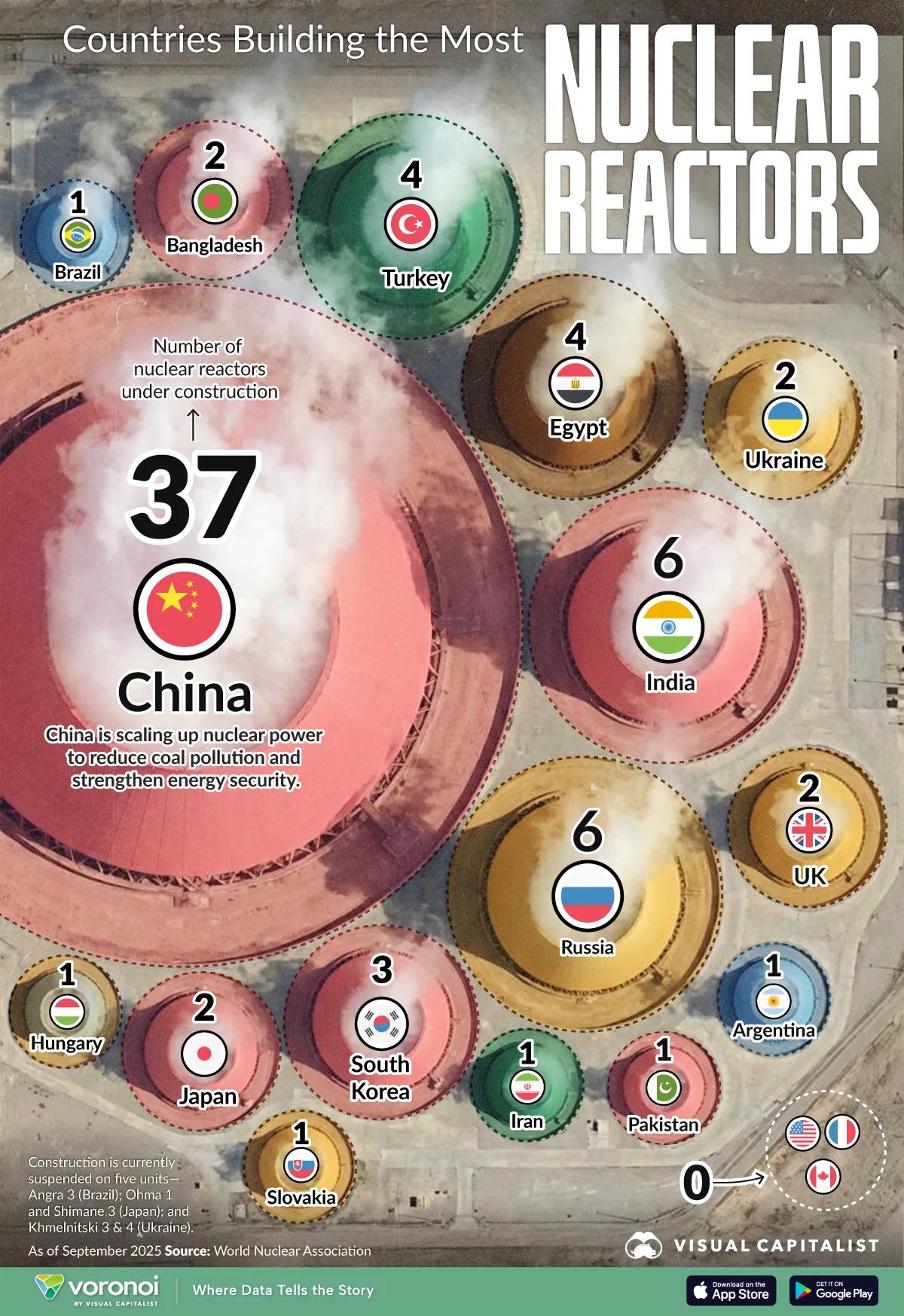
The United States operates the world's largest commercial nuclear power fleet. As of March 2026, 96 reactors at 57 nuclear power plants across 28 states produce a combined net summer capacity of 98,441 megawatts, according to the Energy Information Administration. Nuclear generates approximately 18 percent of total U.S. utility-scale electricity, making it the largest single source of carbon-free power in the country.
The fleet has remained relatively stable in size over the past decade following retirements driven by low natural gas prices and restructured electricity markets. The two new units at Plant Vogtle in Georgia, completed between 2023 and 2024, represent the only large-scale conventional reactor additions to the U.S. fleet in roughly 30 years.
Nuclear plants operate at consistently high capacity factors. The average U.S. reactor ran at approximately 92 percent of its rated capacity in recent years, compared to roughly 35 percent for wind and 25 percent for utility-scale solar. That reliability characteristic makes nuclear plants particularly valuable for baseload grid stability, especially as data center and industrial electricity demand accelerates.
Five countries -- the United States, France, China, Russia, and South Korea -- account for 71 percent of global nuclear generating capacity. Advanced reactor projects including TerraPower's Natrium installation in Kemmerer, Wyoming, which received its NRC construction permit in March 2026, could begin adding new capacity to the U.S. fleet by the early 2030s.