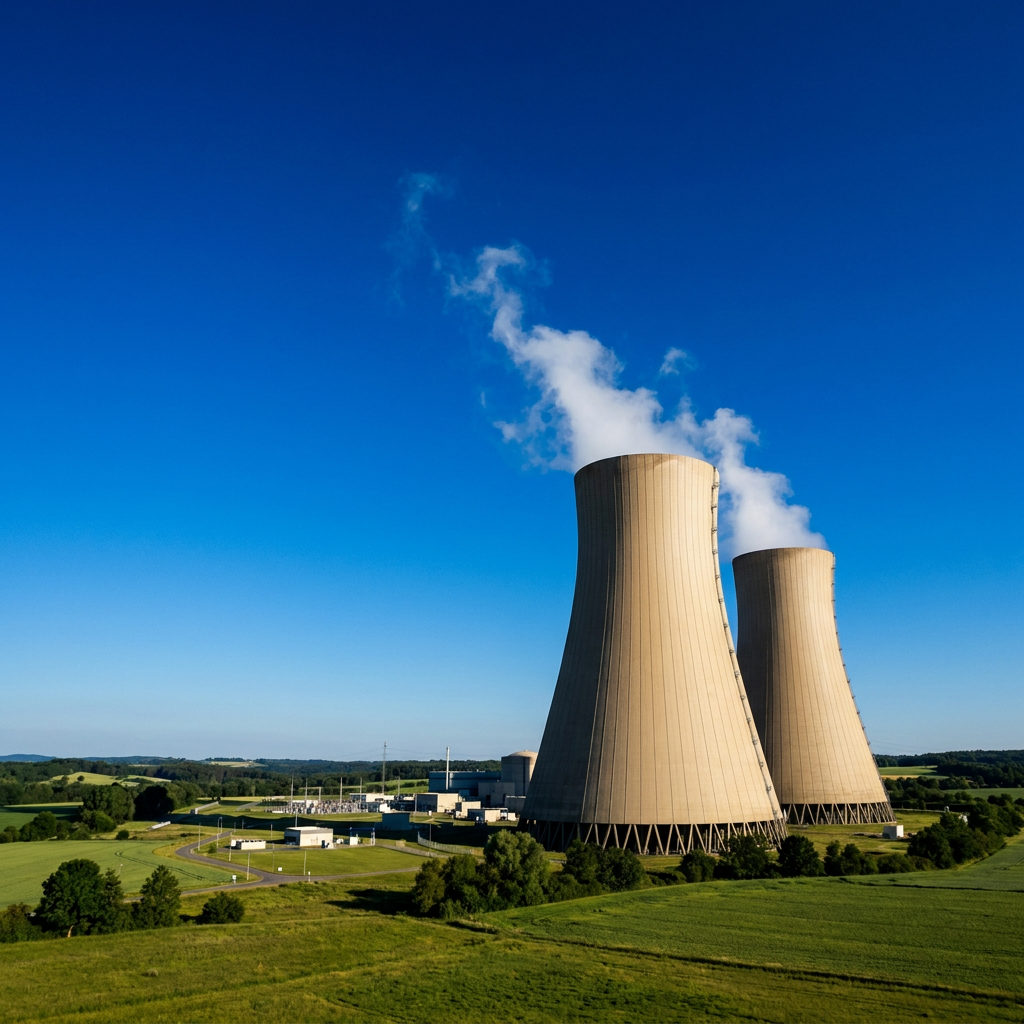
The US Energy Information Administration's compiled figures show nuclear energy remains a significant, steady component of the country's power supply. The fleet totaled 93 operable reactors with a combined net summer generating capacity of 95.55 million kilowatts, spread across 28 states. Those reactors produced roughly 778 billion kilowatt-hours of electricity in the year measured, accounting for about 18.9 percent of total US electricity generation, a share that has held close to 20 percent since 1990 according to the agency's data.
The fleet's average annual capacity factor stood at 92.7 percent, meaning the reactors operated near their full rated output for almost the entire year, a performance level the agency notes is significantly higher than most other generating technologies achieve. Palo Verde in Arizona, which houses three reactors, ranks as the country's largest single nuclear plant by capacity at nearly 3,937 megawatts. On the fuel side, EIA figures show US producers reported uranium concentrate production of 21,000 pounds and expenditures of $72.5 million during the period covered, at an average purchase price of $33.91 per pound of U3O8, underscoring how much of the fuel supply chain still depends on imports and long-term contracts rather than domestic mining. The agency's nuclear fuel cost figure, 0.61 cents per kilowatt-hour, compares to 2.46 cents for fossil steam generation, a gap the industry often cites when discussing the economics of running existing plants versus building new fossil capacity.
Source: U.S. Energy Information Administration - https://www.eia.gov/energyexplained/nuclear/data-and-statistics.php