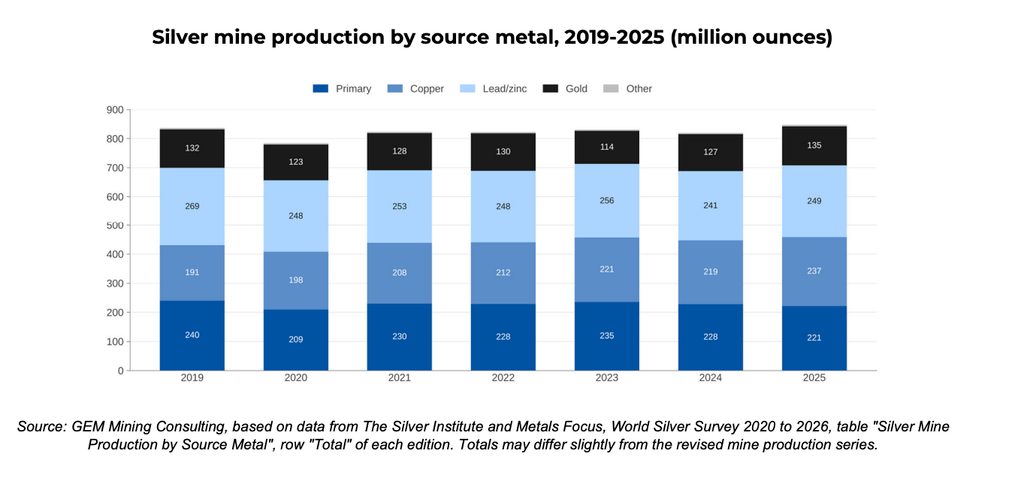
Primary silver mines supplied just 26.1 percent of global mine output in 2025, down from 28.7 percent in 2019 and the lowest share in Metals Focus records, according to a MINING.COM analysis published November 24, 2026. Most silver now comes as a byproduct: lead and zinc operations contributed 29.4 percent, copper mines 28 percent and gold operations 15.9 percent.
That mix helps explain why global mine production is expected to stay virtually flat in 2026, at a projected 834 million ounces, despite a sixth straight annual market deficit. Figures from the Silver Institute and Metals Focus put this year's shortfall at 35 million ounces and the cumulative gap since 2021 at about 746 million ounces.
Between 2019 and 2025, silver output from copper mines rose 24.5 percent, while production from lead and zinc operations fell 7.3 percent and gold-related output edged up 2 percent. Dedicated silver mines lost 7.9 percent of their output over the same period amid declining grades. Metals Focus expects primary mines to add 6.5 million ounces this year, mostly in Mexico, which would cover less than one fifth of the projected shortfall.
Demand has also shifted. Annual demand averaged 1.17 billion ounces from 2021 to 2025, up 20 percent from the prior four years, but Metals Focus expects a 5 percent decline in 2026, while recycling is projected to rise 6 percent to its highest level since 2012. Deutsche Bank estimates solar silver use will fall more than 20 percent this year. "Peak silver scarcity is clearly in the rear-view mirror," Deutsche Bank head of metals research Daniel Ghali wrote.
The article does not break out US mine output.
Source: MINING.COM -- https://www.mining.com/silver-miners-struggle-to-close-persistent-supply-gap/