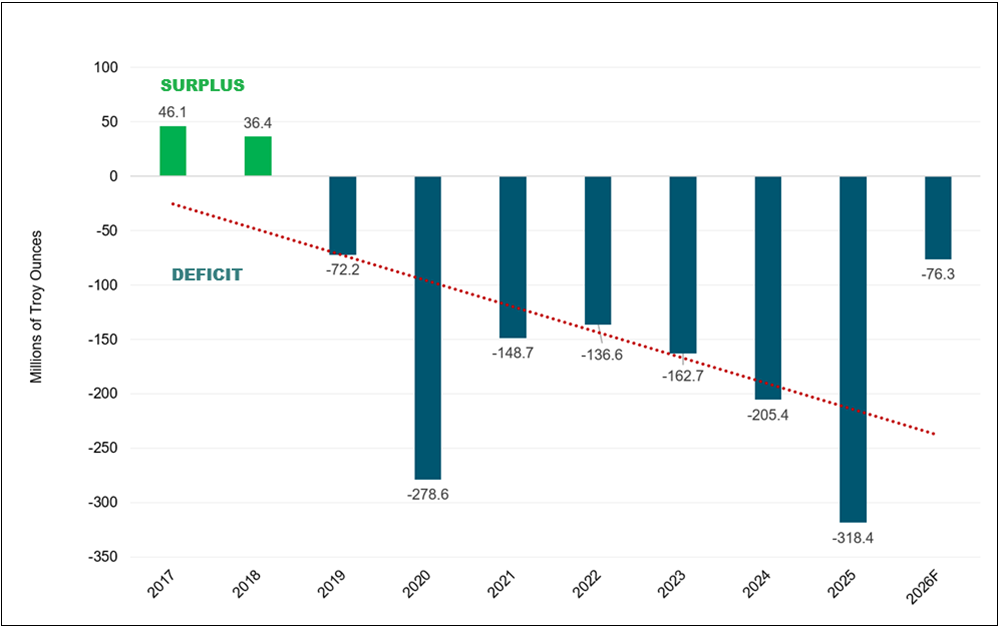
The global silver market ran a deficit of 318.4 million troy ounces in 2025, the widest shortfall in a Sprott chart of annual supply and demand balances that begins in 2017. The chart, built from Bloomberg data as of July 1, 2026, appears in a Sprott Asset Management precious metals report published July 10, 2026.
The series shows the market in surplus at the start of the period, with 46.1 million ounces in 2017 and 36.4 million in 2018. It then turned to deficit in 2019 at 72.2 million ounces. The 2020 shortfall reached 278.6 million ounces, followed by 148.7 million in 2021, 136.6 million in 2022, 162.7 million in 2023 and 205.4 million in 2024. The chart labels a 2026 forecast deficit of 76.3 million ounces and draws a downward trend line through the deficit years.
Sprott's report ties the persistent shortfalls to constrained mine supply and growing demand. It states that few large new mining projects could materially change the medium-term supply outlook, and it cites solar panel manufacturing, electric vehicles, AI infrastructure, data centers and defense uses as industrial demand drivers.
The report also covers silver prices. Spot silver fell $16.70 an ounce, or 22.18%, in June 2026 to close the month at $58.60, which Sprott described as the largest monthly decline since September 2011. For the quarter ended June 30, silver fell 22.04%. Sprott noted that silver is more volatile than gold because its market is smaller and less liquid.
Source: Sprott Insights -- https://sprott.com/insights/gold-and-the-us-dollar-paradox-cyclical-volatility-in-a-secular-repricing-of-monetary-assets/