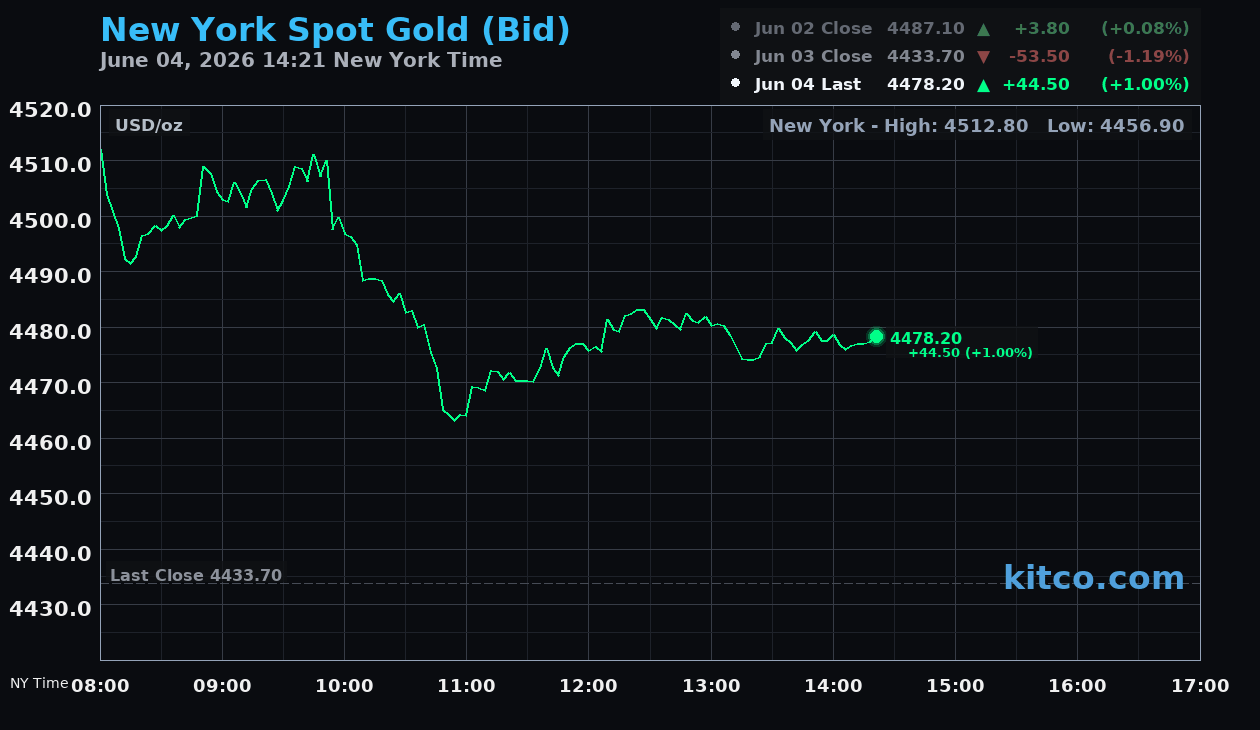
Gold averaged $4,872.9 per ounce on the LBMA PM price benchmark in Q1 2026, a 70% year-over-year increase from Q1 2025's quarterly average. The metal set an all-time high of $5,405 per ounce in January before correcting as US dollar strength and shifting Federal Reserve rate expectations applied downside pressure. Despite the pullback, gold delivered a 6% return for the quarter.
Silver tracked gold's trajectory with greater volatility, reflecting its dual role as both a monetary and industrial metal. The gold-silver ratio fluctuated across a wide range during Q1 as industrial demand signals for silver remained uncertain against the backdrop of solar panel production growth and slowing automotive sector demand for photovoltaic applications.
Kitco's market data showed continued strong physical demand from Asian retail buyers even as Western institutional investors moderated their ETF buying. Kitco analysts noted that the $5,000 per ounce level has now established itself as a reference point in the market, with investment demand expected to remain well-supported by geopolitical risk, persistent inflation above central bank targets in several major economies, and sustained central bank purchasing programs that have exceeded the five-year quarterly average for three consecutive quarters.