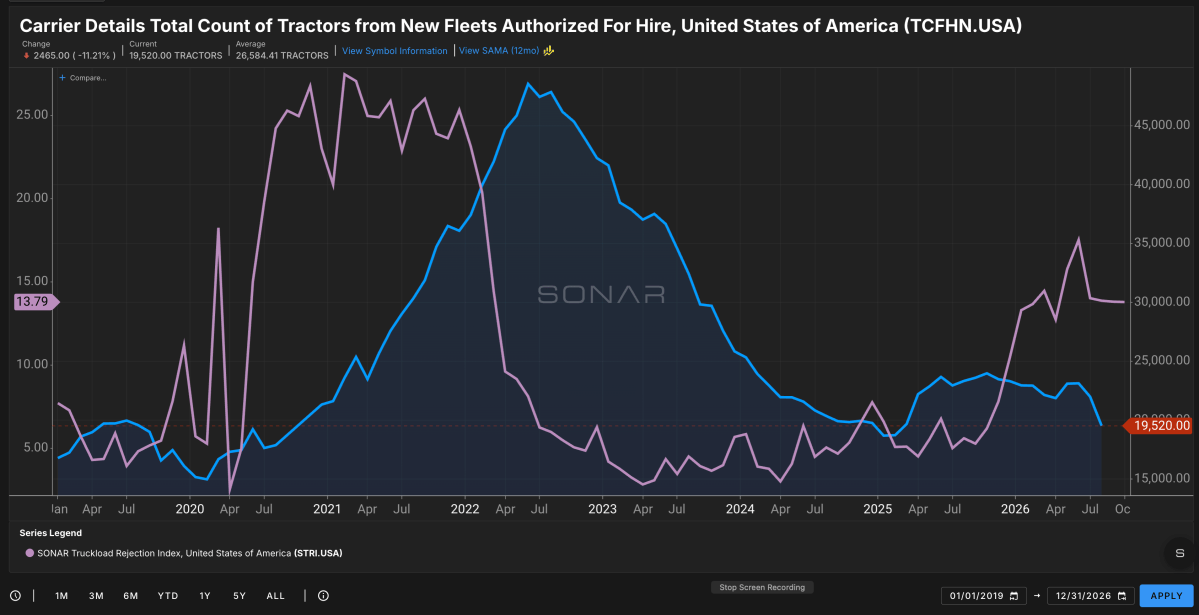
The number of tractors in newly authorized for-hire trucking fleets has fallen sharply, according to FreightWaves SONAR data. New for-hire fleets accounted for 19,520 tractors in August 2026, about 14% below the average for the first half of the year and well under the mid-2022 peak of roughly 47,000.
The broader count of for-hire tractors also fell, declining by about 51,000 in August. Over the same period, tender rejections held near 14%, roughly three times the range recorded from 2023 through 2025. Rejections are up 268% over three years, while truckload volume measured by the SONAR Truckload Volume Index rose 9%, so carriers are turning down far more loads on similar freight levels.
New operating authorities have kept arriving. Net authority additions topped 2,000 per week in August and September 2026, a five-year high, though estimated new grants ran about 17% below the first quarter. Only about two in three new interstate registrants now buy liability insurance, down from more than nine in ten in 2019. The analysis treats that gap as a sign that many new registrations are not putting working trucks on the road.
Driver supply faces its own limits. As of Jan. 2, 2026, 202,345 CDL and permit holders were in prohibited status in the Drug and Alcohol Clearinghouse, and English language proficiency enforcement takes about 2,700 drivers out of service each month. ATRI research found that about 10% of carriers' trucks sat without a driver in 2025. Liability and cargo insurance premiums rose 3.9% in 2025 to about 10.6 cents per mile.
Source: FreightWaves -- https://freightwaves.com/news/is-trucking-capacity-coming-back-why-new-capacity-isnt-entering-the-2026-freight-market