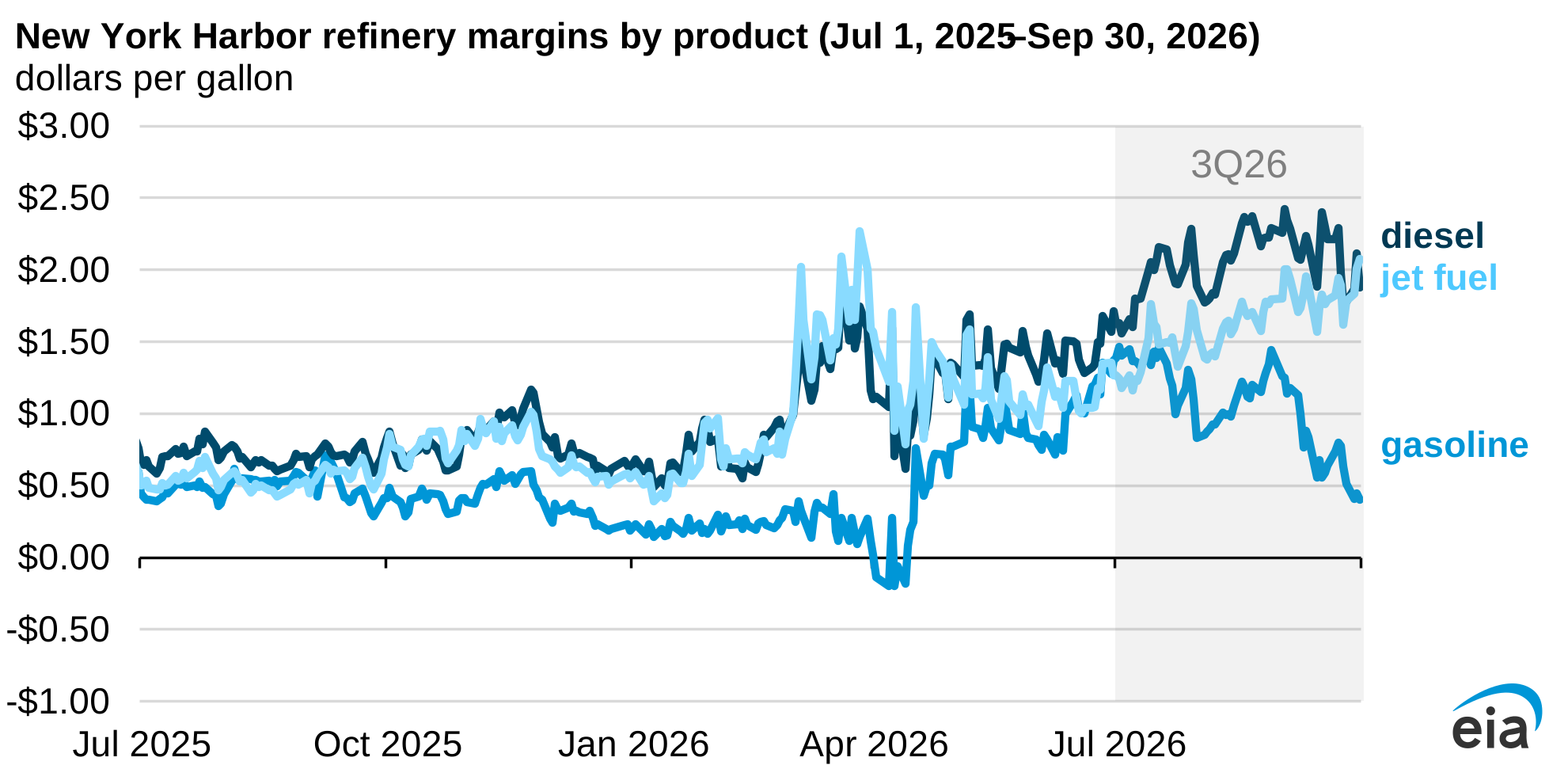
The U.S. Energy Information Administration published an analysis on October 5 of petroleum markets in the third quarter of 2026. U.S. refineries ran at unseasonally high levels, with utilization averaging 95%. Refiners processed the most crude oil for a third quarter since 2019, when refining capacity was 4% higher than it is now.
Margins for transportation fuels were elevated. The quarterly average gasoline crack spread more than doubled from the year-ago level, while the distillate and jet fuel crack spreads almost tripled. EIA attributes the widest spreads to disrupted refining activity in Russia, China and the Middle East, which supply large shares of distillate and jet fuel to global markets. Crack spreads measure the margin between a product price and crude, here using New York Harbor spot prices for gasoline blendstock, ultra-low sulfur diesel and jet fuel minus the Dated Brent spot price.
Distillate supplies in the United States have tightened because of high exports to short-supplied markets and higher import costs for regions such as the East Coast. As of the week ending September 25, distillate fuel inventories stood 13% below the five-year average for 2021 through 2025. Gasoline inventories were 7% below their five-year average, and jet fuel inventories were 3% above.
Crude prices climbed through the quarter. Brent futures began July at $72 per barrel, passed $100 on July 23 and again on September 9, and peaked at $109 on September 15, with spot prices reaching as high as $132 around that time. Releases from the U.S. Strategic Petroleum Reserve slowed significantly in September, which limited an additional source of supply while the Middle East disruption continued. The accompanying EIA chart shows New York Harbor refinery margins by product from July 2025 through September 2026.
Source: U.S. Energy Information Administration - https://www.eia.gov/todayinenergy/detail.php?id=68245