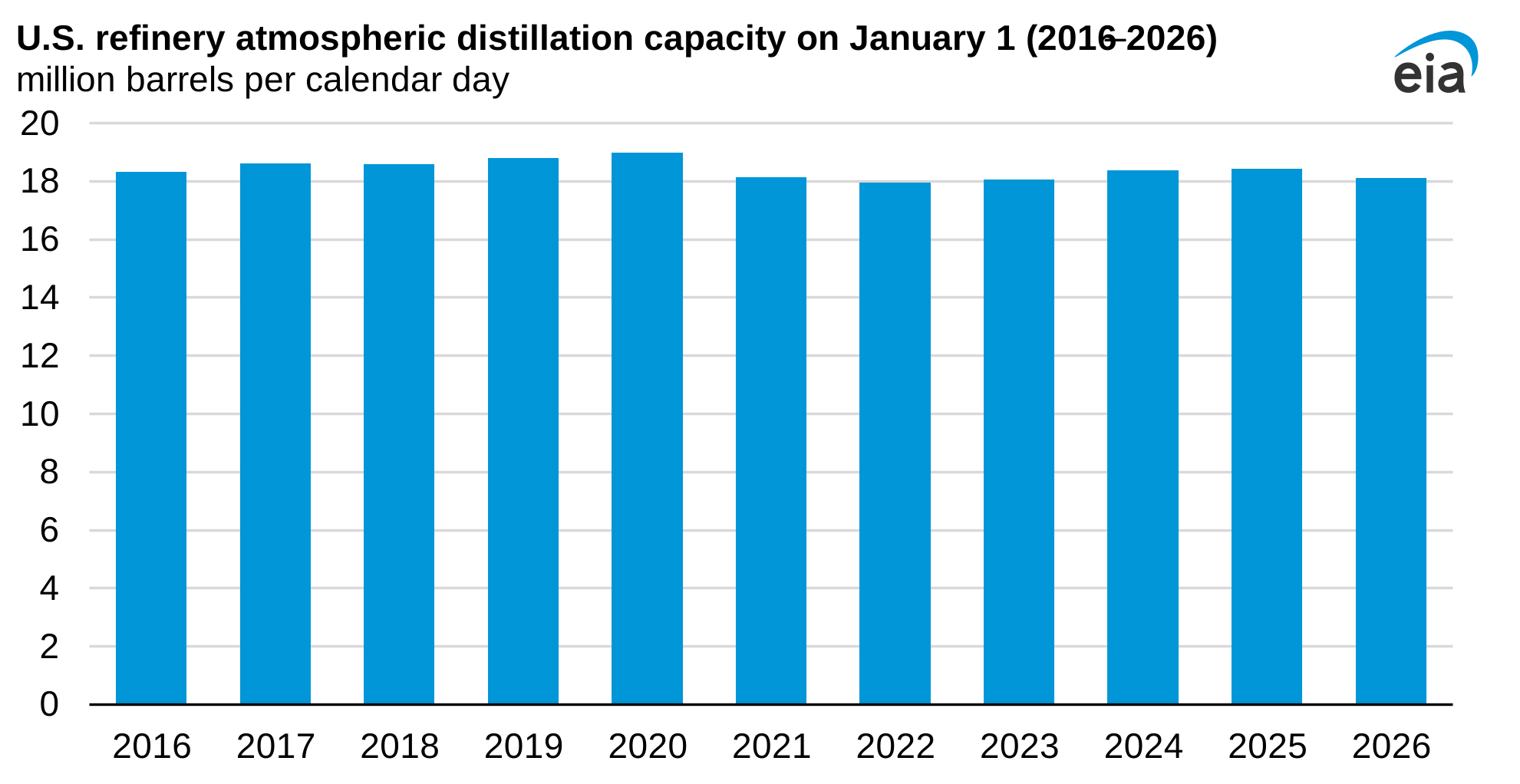
U.S. operable atmospheric distillation capacity, the primary measure of refinery capacity, totaled 18.2 million barrels per calendar day on January 1, 2026. That is down more than 250,000 barrels per calendar day, or about 1%, from January 1, 2025, according to the U.S. Energy Information Administration's annual Refinery Capacity Report. The 2026 report lists 130 operable refineries, two fewer than the year before.
Two closures drove the decline. LyondellBasell ended refining at its 263,776-barrel-per-calendar-day Houston refinery in March 2025, and Phillips 66 ceased operations at its 138,700-barrel-per-calendar-day Los Angeles refinery in October 2025. Together the two facilities removed about 400,000 barrels per day of operable capacity, partly offset by small capacity increases at other refineries. Marathon, Valero and ExxonMobil, the three largest refiners, each reported calendar day capacity gains of less than 1%.
The West Coast felt the larger share of the loss. The Los Angeles closure cut capacity in PADD 5 by 5%. Valero's 145,000-barrel-per-day Benicia refinery in California was still counted as of January 1, 2026, but it has since ceased refining and EIA removed its capacity from monthly estimates as of March 2026. EIA noted that little pipeline capacity exists to move petroleum products from Gulf Coast refinery hubs to the West Coast, so capacity cuts there have a larger effect on regional fuel availability. The Houston closure represented 3% of Gulf Coast capacity, and regional capacity fell by less than 2% after offsetting gains.
Motiva's Port Arthur refinery remains the largest in the country at 656,000 barrels per calendar day.
Source: U.S. Energy Information Administration - https://www.eia.gov/todayinenergy/detail.php?id=67807