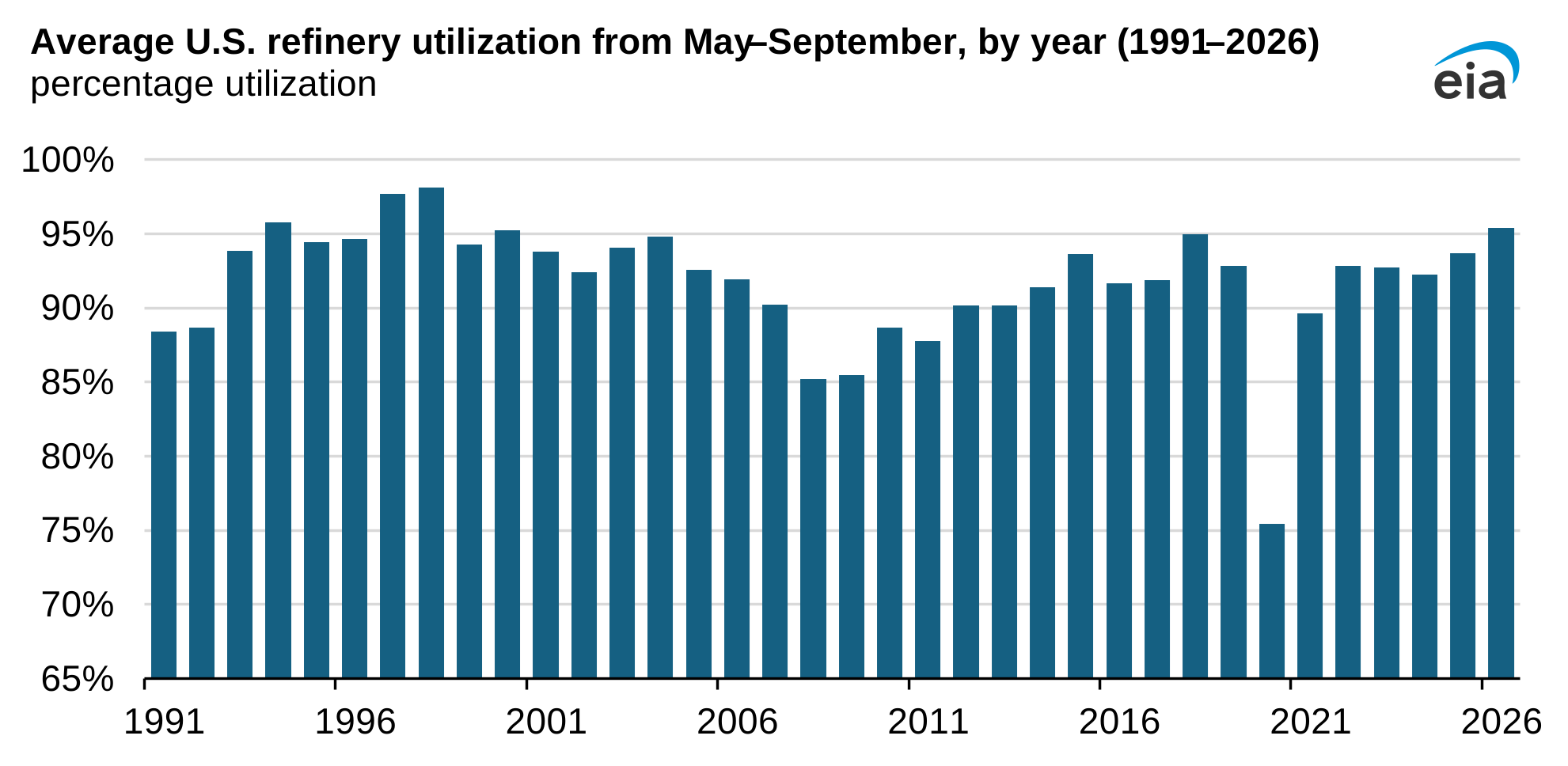
US refineries ran at more than 95% of capacity on average from May through September 2026, the highest rate for those months since 1998, according to the Energy Information Administration. The agency's Weekly Petroleum Status Report supplies the data behind the chart.
Since 1991, US refinery utilization has averaged 92% from May to September, compared with 88% across the other seven months. Refineries typically run hardest in the warm months to build gasoline supply for peak summer demand. Distillate demand peaks in fall and winter, so high summer runs usually lift distillate inventories before seasonal maintenance begins.
EIA attributes this year's elevated runs largely to tight global supplies of distillate fuel oil. That tightness pushed up margins for petroleum products, particularly diesel, and boosted international demand for US distillate exports, which gave refiners a reason to maximize output.
Total refinery output ranks lower in the historical record than the utilization figure. Output this summer was the highest since 2019, because US refining capacity has declined 4% since 2019. A smaller refinery fleet running near its ceiling produces less fuel than the larger fleet of earlier years running at lower rates.
In the first three weeks of October, utilization eased from its summer highs but stayed above the five-year seasonal average for 2021 through 2025. The agency's chart plots May-September average utilization by year from 1991 to 2026.
Source: U.S. Energy Information Administration - https://www.eia.gov/todayinenergy/detail.php?id=68344